Lake Landscape Digital Papers: Streamlining Visual Assets for Creative Workflows
In the modern digital creative economy, the bottleneck is rarely a lack of ideas; it is almost always a shortage of time. Whether you are a freelance graphic designer juggling multiple client deadlines, a small business owner managing your own brand identity, or an educator creating engaging classroom materials, the efficiency of your asset management directly impacts your bottom line and your stress levels. This is where specialized resources like Lake Landscape Digital Papers transition from simple decorative elements to strategic tools in your production pipeline.
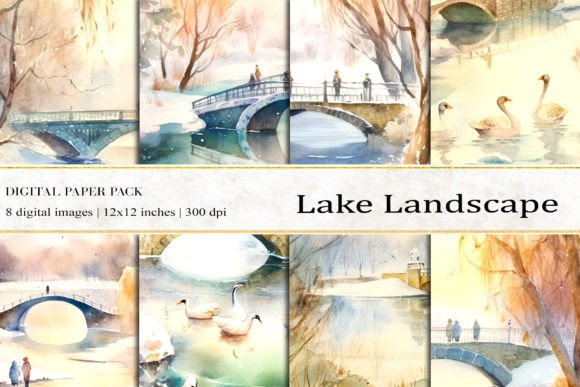
This specific collection of eight high-resolution digital papers offers more than just aesthetic appeal. It provides a consistent, high-quality visual foundation that can be integrated into various stages of a project lifecycle. By understanding how these assets function within broader workflows—from initial concept sketching to final print delivery—you can significantly reduce turnaround times while maintaining professional standards. The following analysis explores the practical application of this set, focusing on integration, compatibility, and long-term utility for creators and entrepreneurs alike.
Understanding the Asset Specifications and Workflow Implications
Before diving into use cases, it is essential to understand the technical specifications of the product, as these dictate its usability in professional environments. You will receive eight distinct digital papers, each sized at 12×12 inches in JPG format with a resolution of 300 dpi. While these numbers may seem standard, their implications for workflow are significant.
- Resolution (300 dpi): This is the industry standard for high-quality printing. For professionals producing physical goods such as scrapbooks, invitations, or fabric prints, this resolution ensures that the AI-generated imagery remains crisp without pixelation. It eliminates the need for time-consuming upscaling processes, which often degrade image quality.
- Dimensions (12×12 inches): This square format aligns perfectly with common scrapbooking standards and many social media content templates. It allows for easy cropping and resizing without losing aspect ratio integrity, streamlining the design process for web graphics and mobile-first layouts.
- Format (JPG): While PNG is often preferred for transparency, JPG is universally compatible across all major design platforms, from Adobe Creative Cloud to Canva and Affinity Suite. This reduces friction when collaborating with team members who may not have access to specialized software.
- Generative Art Origin (Midjourney): The fact that these images were created using Midjourney, a leading generative art AI program, implies a unique texture and depth that traditional stock photography often lacks. However, it also requires users to be mindful of copyright nuances, although most commercial licenses for AI assets allow for modification and resale depending on the platform's terms.
Integration into Design and Branding Workflows
For marketers, bloggers, and entrepreneurs, visual consistency is key to brand recognition. Integrating Lake Landscape Background elements into your branding kit can provide a cohesive look across disparate platforms. Here is how these digital papers fit into different phases of a branding project.
Pre-Production: Mood Boards and Concept Development
The early stages of any creative project involve gathering inspiration. Instead of spending hours searching for generic nature backgrounds, having a curated set of eight lake-themed papers allows for rapid prototyping. You can drag these files directly into presentation software to create mood boards. Because the images share a thematic coherence—watercolor textures, serene landscapes, and soft color palettes—they help establish a specific emotional tone immediately. This speeds up the approval process with clients by providing tangible visual references rather than abstract descriptions.
Production: Web Design and Social Media Content
Once the concept is approved, the assets move into active production. In web design, these digital papers serve as excellent background layers for landing pages, blog headers, or email newsletters. The watercolor aesthetic softens the user interface, making digital spaces feel more approachable and organic. When used in HTML/CSS, these images can be tiled or stretched appropriately due to their 300 dpi clarity.
For social media managers, the 12×12 inch dimension is particularly useful. You can overlay text, quotes, or promotional graphics onto these backgrounds to create Instagram posts, Pinterest pins, or Facebook covers. The natural variation among the eight designs prevents visual fatigue, allowing you to rotate backgrounds frequently without compromising brand consistency.
Post-Production: Archiving and Repurposing
A robust workflow includes planning for future use. These digital papers are not one-time use items. They can be archived and repurposed for seasonal campaigns. For instance, a "summer retreat" promotion can utilize the brighter lake tones, while a "winter reflection" campaign might lean toward cooler, muted versions found in the set. Organizing these files in a dedicated folder structure within your cloud storage ensures they are easily retrievable for future projects, reducing repetitive search costs.
Practical Applications for Physical Products and Crafters
While digital applications are prevalent, the 300 dpi resolution makes these assets highly valuable for physical production. Small business owners selling on platforms like Etsy or running local craft fairs can leverage these papers to create tangible products efficiently.
Print-on-Demand and Fabric Printing
For those involved in fabric printing or home decor items, the watercolor lake theme offers a timeless aesthetic. These patterns can be applied to throw pillows, curtains, or apparel. Because the images are generated via AI, they possess intricate details that translate well to textile prints, provided the printing method supports high-resolution inputs. Ensure your printing vendor accepts JPG files at 300 dpi to avoid quality loss during the transfer process.
Stationery and Business Cards
Professional credibility is often conveyed through subtle design choices. Using Lake Landscape Digital Papers as a background for letterhead, stationary, or business cards adds a layer of sophistication. The watercolor effect suggests creativity and attention to detail, qualities desirable in fields like counseling, education, or artistic consulting. When designing these items, consider leaving ample white space or using semi-transparent overlays to ensure text legibility, a common best practice in typography and layout design.
Planner Stickers and Scrapbooking
The planner community values both aesthetics and functionality. These digital papers can be sliced into smaller sticker sheets for digital planners (used on iPads) or printed for physical use. The 12×12 size is ideal for cutting down into 1x1 inch stickers or larger journaling cards. For scrapbookers, these backgrounds provide a ready-made canvas that saves the time required to scan physical paper or paint custom backgrounds. This efficiency allows hobbyists to focus on photo placement and storytelling rather than material preparation.
Quality Control and Consistency Checks
When integrating any new asset pack into a workflow, quality control is paramount. Since these images are AI-generated, it is wise to perform a quick visual inspection before large-scale deployment. Check for any anomalies in the watercolor bleed or edge artifacts that might become noticeable upon close inspection or scaling.
Additionally, consider color calibration. Screens display colors differently than printers. If you are using these papers for print-heavy projects, run a test print on your target paper stock. Adjust the brightness or contrast if necessary to ensure the final output matches the digital preview. This step is crucial for maintaining brand consistency, especially if you are producing multiple batches of invitations or packaging over time.
Optimizing File Organization for Long-Term Efficiency
To maximize the utility of this set, proper file organization is essential. Do not simply dump the eight JPG files into a random folder. Create a structured directory system. For example:
- Create a main folder named "Lake_Landscape_Assets_2024".
- Inside, create subfolders for "Web_Backgrounds", "Print_High_Res", and "Social_Media_Crops".
- Copy the original 300 dpi JPGs into "Print_High_Res".
- Create resized versions (e.g., 1920px width for web, 1080px for social) and save them in the respective subfolders.
This proactive approach saves minutes per project, which accumulates to hours over a year. It also ensures that you always have optimized assets ready for immediate use, reducing the friction between idea execution and completion.
Conclusion
The value of Lake Landscape Digital Papers lies not just in their beauty, but in their versatility and readiness for integration. By treating these assets as functional components of a larger workflow rather than mere decorations, creators and professionals can enhance their productivity, maintain higher quality standards, and deliver more polished results. Whether used for digital branding, physical product creation, or personal organization, this set offers a reliable foundation for diverse creative endeavors. Embrace the efficiency gains by incorporating these high-quality backgrounds into your next project, ensuring that your visual communication is as effective as it is aesthetically pleasing.